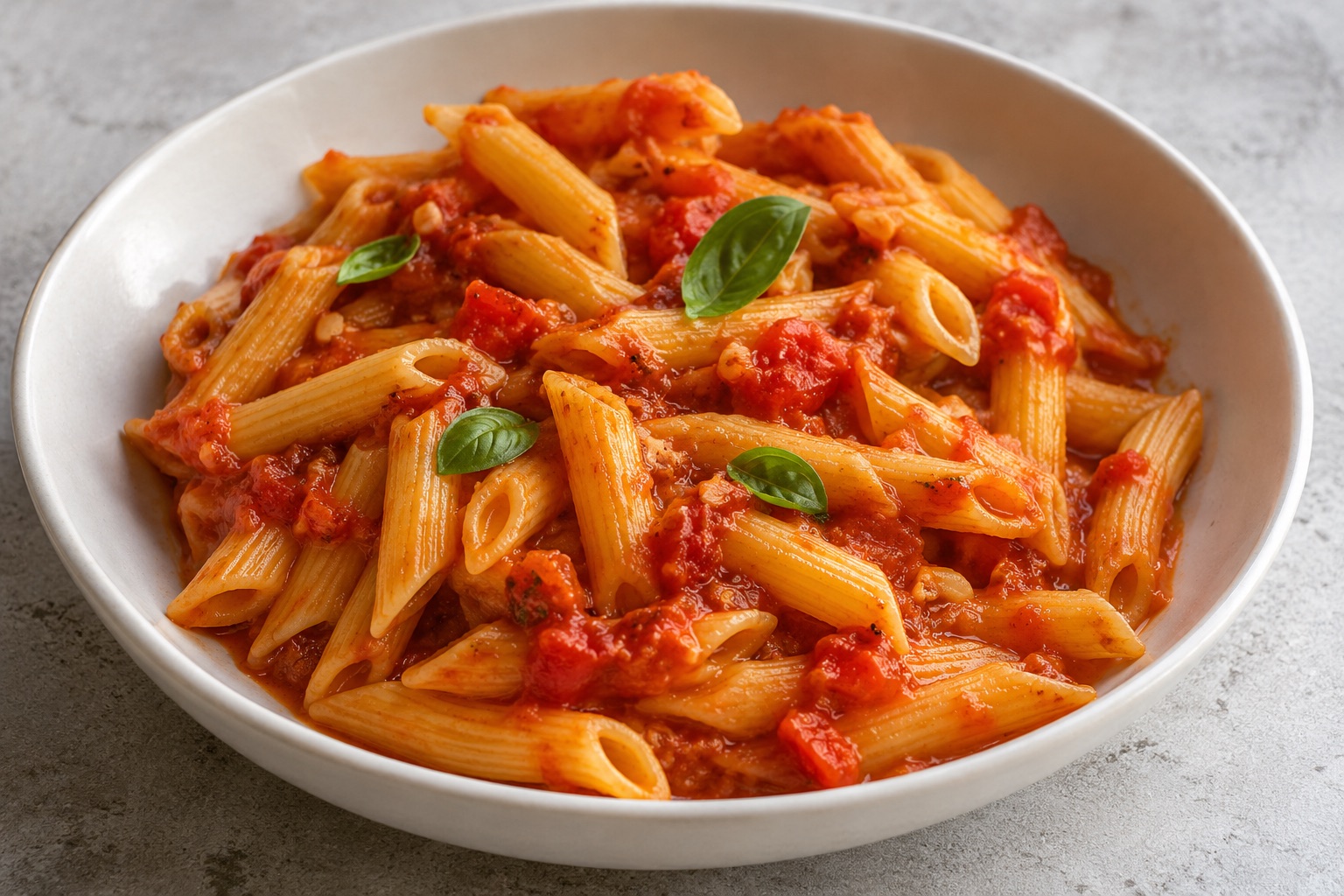
Tomato and Basil Penne
Finish penne in a garlic tomato sauce, then fold in fresh basil off the heat. Makes two main-course portions in approximately 30 minutes.
See the recipe
Choose between tomato basil penne and creamy mushroom tagliatelle. Both recipes include ingredient quantities and instructions; use the sauce and cooking tips below to plan your meal.
Finish penne in a garlic tomato sauce, then fold in fresh basil off the heat. Makes two main-course portions in approximately 30 minutes.
See the recipe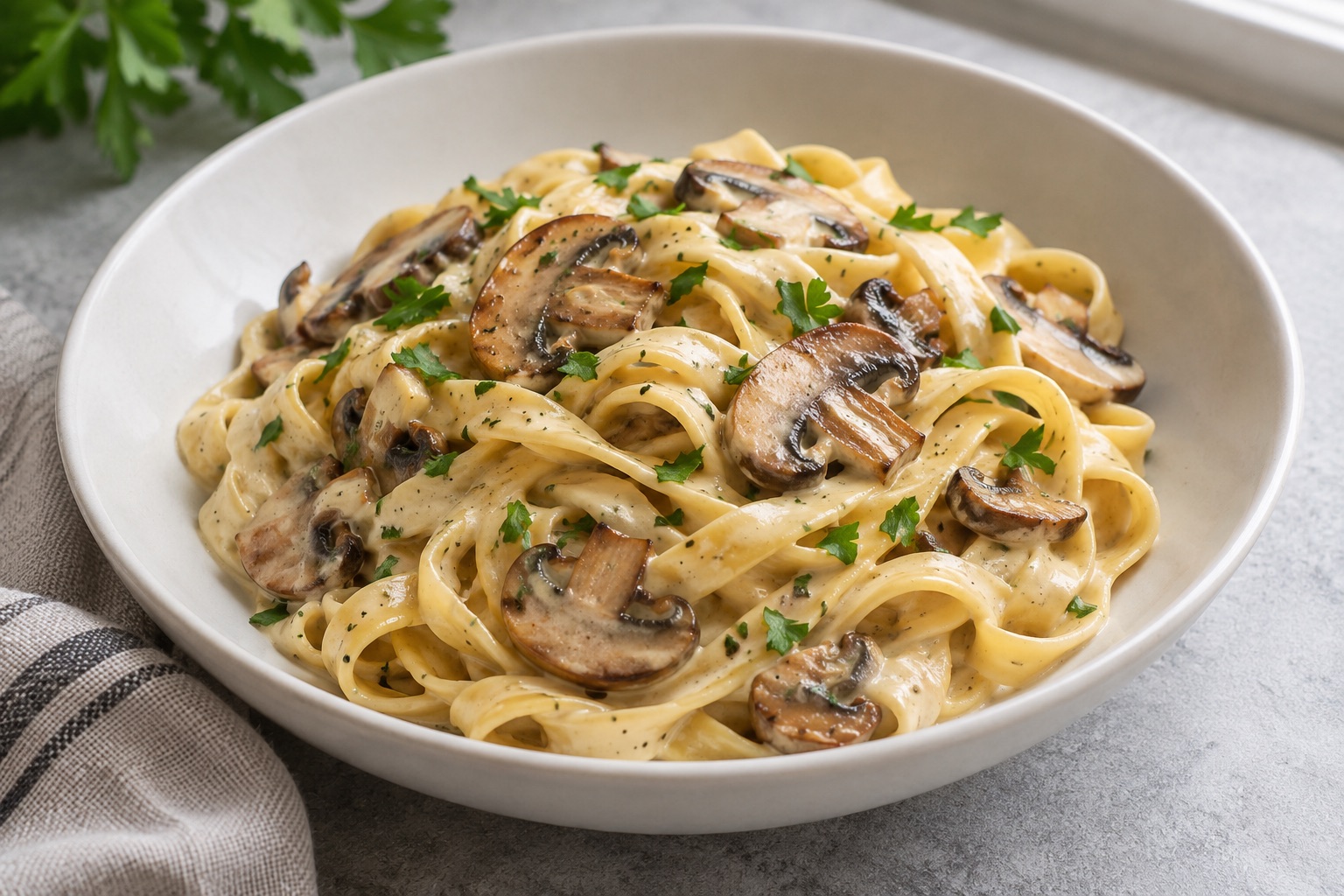
Browned mushrooms, cream and tagliatelle make a pasta dish for two. Finish with parsley and allow approximately 25 minutes.
See the recipeTomato ripeness and water content affect sauce consistency. Watery tomatoes may need longer to reduce; tomato paste has a different concentration and flavour. Follow the recipe proportions rather than swapping equal amounts. Start the sauce first so drained pasta does not sit waiting.
Balance cream, cheese and liquid in creamy sauces. Loosen a thick sauce gradually with hot pasta water. Prolonged high heat can affect cheese sauces; mushrooms and other vegetables also release water. A crowded pan may steam vegetables instead of browning them.
Short, ridged or hollow pasta works well with small vegetable pieces and thicker sauces. Long pasta is easy to toss with sauces that coat its surface. These are suggestions, not rules: use what you have and distribute the sauce and ingredients evenly.
For baked pasta, consider stovetop and oven cooking together. Fully softening pasta before a long bake may make it too soft. Liquid, dish depth and cheese topping also affect the result; use a baking method rather than simply putting a stovetop recipe in the oven.
Use a pot large enough to stir freely. Follow the packet time as a starting point and taste a piece near the end. Allow for any further cooking in the sauce. Brands, thicknesses and ingredients can change the timing.
Reserve some cooking water before draining. Add it gradually to help the sauce coat the pasta; different sauces need different amounts. Rinsing hot pasta removes surface starch. For a cold pasta salad, follow that recipe’s method.
Check consistency after combining the pasta and sauce. If it looks dry, stir in a little reserved water. If it is too watery, stop adding liquid and adjust without overcooking the pasta. Pasta and cheese can absorb more liquid while waiting to be served.
Check whether the recipe weight means dry or cooked pasta. A side portion differs from a main meal. Gluten-free or pulse-based pasta may cook differently from wheat pasta; follow its packet instructions. Review these measurements when cooking from a video too.
It can loosen the sauce and help it coat the pasta. Add small amounts and stir; the quantity needed depends on the sauce.
No. Moisture, salt and melting behaviour vary. Check consistency and seasoning when changing cheese rather than assuming an equal swap.
Pasta served with a hot sauce usually does not need rinsing; surface starch helps the sauce cling. Follow the recipe for cold salads or other preparations.